


Many businesses collect customer information across websites, CRM systems, transactions, and marketing platforms but struggle to turn it into meaningful action. Fragmented records, inconsistent data collection, and unclear customer identities make it difficult to identify valuable audiences, personalize campaigns, and measure performance. As privacy expectations evolve, businesses need a structured first-party data strategy that connects responsible data collection with measurable marketing outcomes.
Customer data is dispersed in systems, inconsistently labeled and captured without any business goal. Privacy norms become increasingly high, therefore companies need an effective approach to building relationships based on customer information. Effective first-party data strategy in 2027 relies on permissioned capturing, reliable customer identification and appropriate marketing action.
What is a first-party data strategy?
A first-party data strategy is a structured approach to collecting, managing, unifying and activating information a business gathers directly through its customer interactions. It helps organizations improve customer understanding, create relevant audiences and measure marketing performance while respecting applicable privacy requirements.
1. Determine Your Objective Before Collecting Data
Make sure that you understand what exactly should be improved before implementing new forms, tracking, platforms or any other solutions. For example, a retail organization may want to increase repeat purchases. A B2B organization may be interested in identifying purchasing groups, multi-location organizations may need to determine difference between locations.
Your goals should be measurable. For example
- Increase repeat purchases or renewals
- Reduce unnecessary spend on existing customers
- Find cross-sell and upsell opportunities
- Lead generation and better conversion of marketing campaigns.
2. Collect Data Through Valuable Interactions
The sources of data can include website interaction, registration, purchase, service request, loyalty, event, email preference, and sale interaction.
Make it easy and worthwhile to sign up by providing an incentive such as buying guide, comparison, saved quotation, loyalty reward and information update.
Transparency is important
- Be transparent about what information you collect and why.
- Ask for information that is relevant to a certain purpose.
- Make marketing opt-in and preference management flexible and clear.
- Record all opt-ins and changes in preference.
- Formulate retention and access policies.
Integrate privacy into your data collection process prior to launching; consult with lawyers because of the different legal requirements.
3. Join Records to Unify the Picture of a Customer
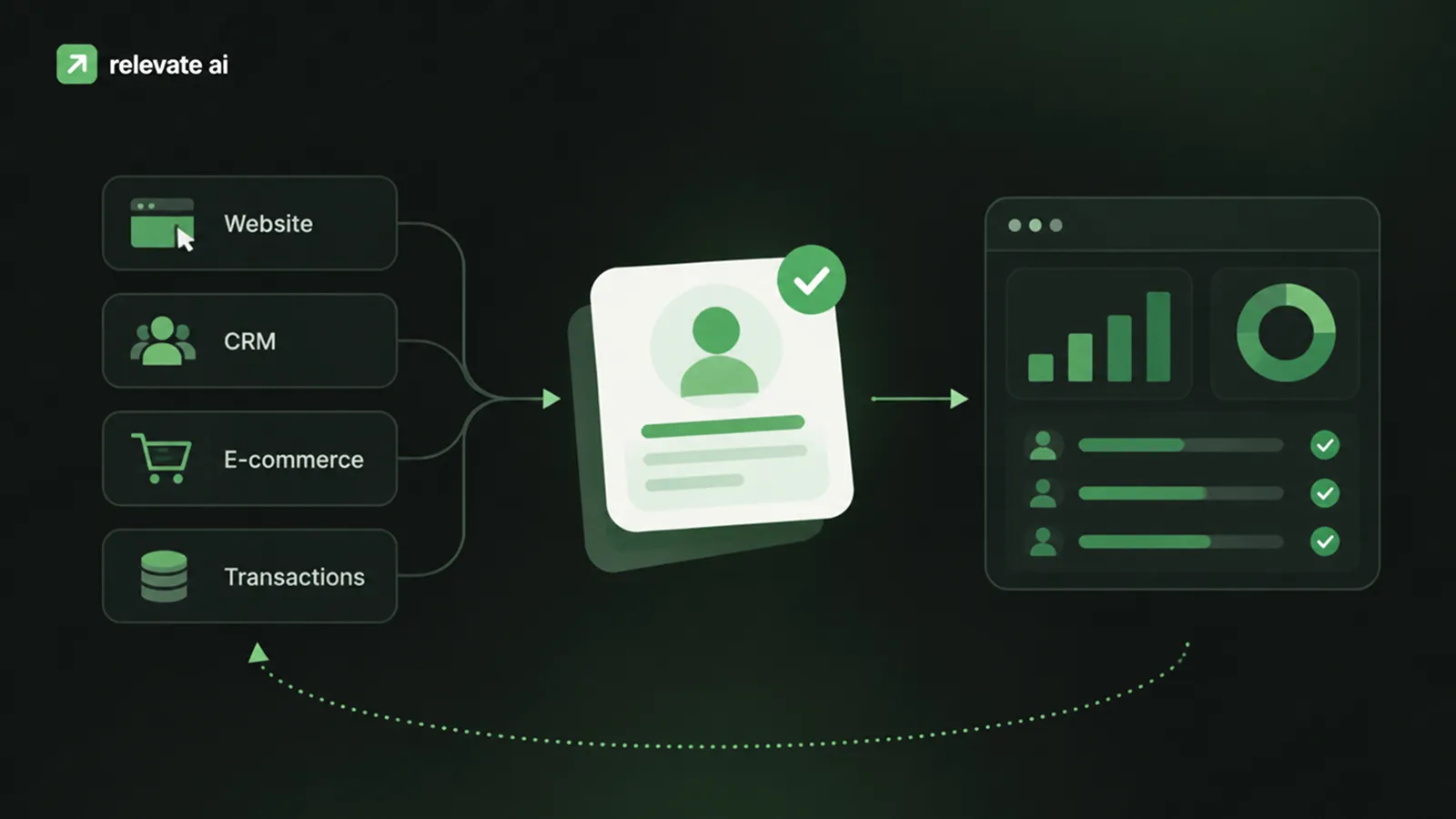
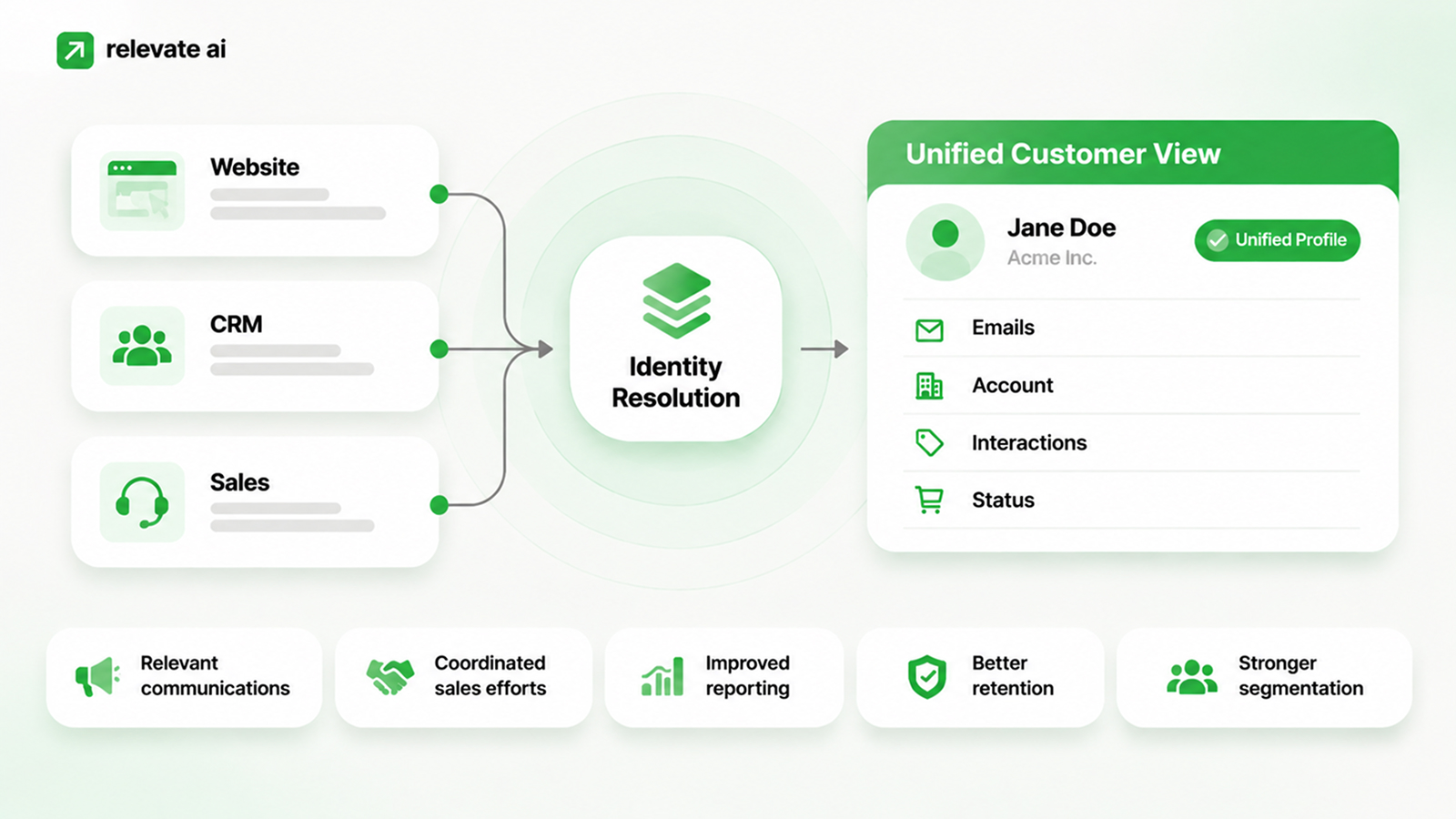
It is possible to link the CRM name, marketing email address, and ecommerce purchase ID to a single customer. The lack of consistency will lead to multiple mailing, incomplete purchasing history and wrong analysis of campaigns.
Join records from various sources such as CRM, ecommerce, point of sale, marketing automation, services and transactions. Your first party data strategy depends on proper identification standards and record matching process.
Standardize customer information, identify duplicate records and use identity resolution to connect records that belong to the same person or business account. Matching rules should distinguish individual contacts from company accounts and avoid incorrectly combining unrelated records.
A useful profile brings together contact details, consent, purchase history, interests, service interactions and account attributes. Keep fields current and their sources clear.
4. Activate First-Party Data Across Marketing and Sale
Collecting and organizing first-party data creates value only when businesses use it to improve customer interactions. Connected customer information can help marketing teams build relevant audiences, personalize communication and support sales teams in identifying opportunities.
Create useful segments: first-time buyer, repeat buyer, inactive subscriber, approaching renewal, and interested in product category.
These segments should be used to
- Avoid approaching new buyers with offers unrelated to acquisition.
- Deliver onboarding information that is product-specific.
- Make recommendations based on past purchases.
- Give sales priority to engaged accounts.
- Reactivate inactive accounts.
Track performance metrics like conversion, repeat purchase, qualification of pipeline and value of the customer. Opens and clicks are diagnostic, not the final metric.
5. Track Data Quality and Marketing Performance
List size is not a measure of quality. Check whether records are accurate, current, permissioned, and usable. A well-run first-party data strategy treats these checks as ongoing work, not a one-time cleanup.
Useful measures include
- Valid identifiers and duplicate-record rates.
- Completeness of customer profiles.
- Consent and preference accuracy.
- Audience matching and campaign delivery rates.
- Conversion, retention and revenue based on audience.
Review these measures regularly. A first-party data strategy should also assign owners to data quality, consent changes and audience updates. When campaigns underperform, examine data quality and audience logic alongside the creative.
How Relevate AI Supports Data Activation
Relevate AI connects CRM, sales, marketing, transaction and warehouse data, then uses identity resolution to reconcile people, companies and accounts into more trusted profiles. Profile enrichment adds useful attributes and signals, helping teams create audiences and identify growth opportunities.
Relevate Marketing Hub helps organizations activate connected customer information to build relevant audiences, identify potential customers, and coordinate targeted marketing across supported channels. By combining identity resolution, profile enrichment, and AI-powered insights, businesses can improve audience selection and connect marketing activities with measurable outcomes.
Campaigns can be analyzed in terms of their responses, conversions, pipeline generation, and revenues. People can approve the recommended actions before taking action.
This helps businesses turn fragmented customer information into actionable insights that support more targeted sales and marketing decisions. The configuration needs to align with the resources and objectives of individual companies.
Conclusion
In 2027, effective customer data work dosen’t mean collecting every possible detail. It means earning useful information, keeping it accurate and applying it in ways that improve customer relationships. Businesses that connect collection, privacy, identity, activation and measurement can get more value from the information they already hold.
Turn your first-party data into actionable marketing insights. See how Relevate AI Marketing Hub helps businesses connect customer information, build targeted audiences, and support more effective marketing activation.