




Running a manufacturers’ representative firm is about more than managing product lines and closing orders. You need strong manufacturer relationships, a reliable customer base, a clear understanding of your territory and enough qualified opportunities to keep revenue moving.
The challenge is that growth rarely comes from one large account or another manufacturer agreement. It comes from building a sales operation that consistently identifies opportunities, follows up with prospects, develops existing accounts, and delivers results for the manufacturers you represent.
As competition for customers and manufacturer partnerships continues, rep firms need a more structured approach to managing their sales pipelines. Sustainable growth depends on consistently generating qualified opportunities rather than relying solely on existing relationships and referrals.
1. Pick Manufacturer Partnerships that Fit into Long-Term Strategy
Expanding your manufacturing portfolio may appear to be the quickest path to increasing your revenues. But an expanded manufacturing portfolio doesn't necessarily translate into more sales.
Your manufacturer partnerships must be compatible with your current portfolio and offer buyers further options without putting them in a difficult position of choosing among your products.
Consider the following when adding a new manufacturer
- Does the product solve a problem that your existing customers have?
- Is there enough market demand for the product in your territory?
- How is the level of manufacturer support? Do they offer training and other forms of assistance?
- Are the margins and commissions good from a business perspective?
- Is the product compatible with your existing portfolio?
Manufacturers also prefer representatives who understand the market and have a consistent communication line, along with the ability to show plans for account development.
2. Create a Prospecting System to Work Repeatedly
Being passive and waiting for referrals or enquiries is a source of unpredictability of income. To grow a profitable manufacturers' representative firm, establish a consistent prospecting system that identifies potential customers, qualifies opportunities, and supports timely follow-ups.
First, create an ideal customer profile for your rep firm. Analyze the sectors, the size of the companies, buying habits, and business needs corresponding to your manufacturer's products.
Afterwards, develop a prospecting schedule including:
- Identification of companies suitable for your target market.
- Identification of purchasing managers, engineers, production directors, and other decision makers.
- Analyzing existing suppliers and the need in a product.
- Prioritizing accounts according to their buying potential.
- Setting appointments instead of remembering about next steps.
Not all prospects have to be treated equally. An account with a known product requirement and ongoing purchasing project should get more attention than a company without any buying signals.
3. Grow Existing Accounts Through Cross-Selling
One of the most overlooked growth opportunities for a rep firm is its existing customer base.
A customer purchasing one product line may also need products from two or three other manufacturers you represent. However, if your salespeople manage each product line separately, those opportunities can easily go unnoticed.
Develop a cross-selling plan through the following steps
- Analyzing buying records from all products offered.
- Finding customers who have not bought any compatible products.
- Matching customer needs against the entire product range.
- Ensuring sales representatives sell other products when conducting account reviews.
- Monitoring cross-selling opportunities and follow-ups.
For example, an industrial customer purchasing electrical components may also need automation equipment or related technical products. If your firm represents complementary manufacturers, you can develop more business from an existing relationship.
This is often more efficient than finding an entirely new customer for every sales opportunity.
4. Get Your Rep Firm Noticed by Manufacturers
The manufacturer looks for a representative who can help grow its market presence, build relations with customers, and earn revenue.
Your reputation will count, but you have to prove that your company can do the job.
Build up your reputation by doing the following
- Providing industry-relevant insights and updates.
- Having an updated web page that tells what kind of expert you are and which products you represent.
- Participating in industry meetings and trade shows.
- Sharing the experience of successful cooperation with your customers with permission.
- Asking for testimonials from pleased manufacturers and customers.
Don’t make your marketing all about the products you sell. Prove to the manufacturer that you know their target markets and their challenges.
The rep firm which is positioned on the market and which has a sales record to show has more chances to persuade a prospective principal.
5. Measure Pipeline Effectiveness Rather Than Counting On Sales Predictions
A hectic sales team doesn't always indicate a strong pipeline; reps could be attending meetings, quoting and communicating with prospects but not making any progress toward closing.
In order to get to the true effectiveness, measure some key metrics
Measure these metrics with your team regularly. Look for stalled opportunities, decreasing order volumes from accounts, and reduced activity levels from territories.
The goal isn't to increase reporting. The goal is to find out what requires attention before lost opportunity turns into lost revenue.
6. Employ AI for Increasing Efficiency in Sales Operations
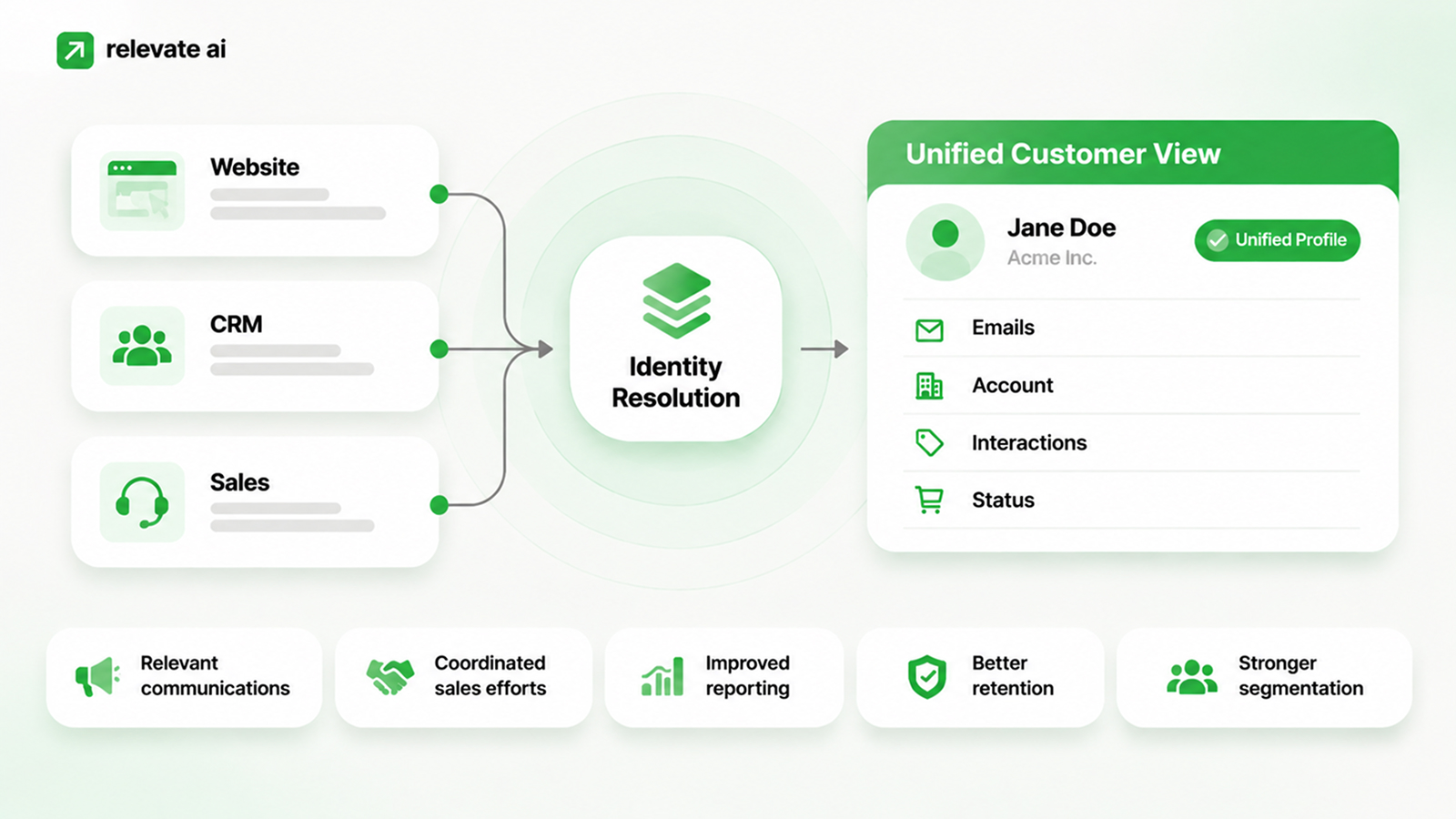
As the size of the rep firm increases, management of information gets tougher. Each manufacturer will have sales data, commission, customer and product data that is all in a different format. This is where AI sales intelligence can make a tangible difference.
Relevate AI Sales Hub helps manufacturers' representative firms connect sales, commission, CRM and opportunity information to identify growth opportunities, monitor revenue risks, and prioritize sales activities.
It is not meant to replace any existing CRM platform but works in conjunction with it to enable teams to comprehend their performance and recognize their sales opportunities.
Capability Highlights
- Unified Account Intelligence – Integrate data from different manufacturers and sales channels to provide better insights into customer behavior.
- Opportunity discovery powered by AI – Identify possible new accounts, cross-sell prospects and poor performing customers.
- Revenue risk analysis – Identify revenue risk by identifying declining purchases and possible commission risk.
- Territory management – Help sales reps concentrate on high growth potential accounts and opportunities.
- AI-based prospecting – Find ideal new prospects through lookalike lists based on industry, company size and location filters.
These capabilities help rep firms identify high-potential accounts, uncover cross-selling opportunities and determine where their sales teams should focus their efforts.
For businesses that want to develop a rep firm without always adding to the administrative burden, linking the sales information with practical insights makes the process more attainable.
7. Create a Growth Strategy that Is Independent of One Principal
A sustainable rep firm should never rely wholly upon one manufacturer, one large client, or one sales person.
Over-reliance brings risks. In case the principal decides to change their territorial strategy or a large client switches to another vendor, it can lead to a rapid drop in income.
How to create more stability?
- Creating relationships with different manufacturers whose products complement each other.
- Covering the client base across industries.
- Recording all relationships and sales process.
- Training new staff for handling accounts.
- Reviewing manufacturer and client income concentration.
- Maintaining a constant prospecting process.
The growth should also be realistically based from the financial point of view.
Think about the expenses, commission pay cycle, cost of hiring of sales people, and time needed for establishing new accounts.
Which Is the Best Way to Grow Your Rep Firm and Gain New Manufacturers?
The best strategy involves selective prospecting, compatible partner manufacturers, better customer relationships, cross selling, and effective pipeline management.
Manufacturers are looking for reps that know their products and their customers, that provide feedback about the market, and that prove themselves as capable of making money.
Instead of telling prospective principals that you have high sales numbers, demonstrate to them how you do all this through sales information.
A well thought-out strategy will seem much more plausible.
Conclusion
Building a rep firm in 2027 is more than just bringing in new manufacturers or doing more sales. It needs a proven process for sourcing prospects, nurturing existing accounts, handling manufacturer relationships, and discovering revenue opportunities within your portfolio.
The rep firms that succeed in achieving sustainable growth will be the ones that not only have industry know-how and relationships but can bring their sales visibility and execution skills into the picture. Technology may help you to do that, but the consistent effort of the sales team is critical.
Ready to identify more growth opportunities across your manufacturer portfolio? See how Relevate AI supports manufacturers' representative firms with connected sales intelligence, account insights, and AI-powered opportunity identification.